Explain it

01.04 β€” 8 short write-ups

Question 1 of 8

A checkpoint, not a test

Science needs evidence

Answer as if your instructor asked during the DBA. A few clear sentences is enough.

A student compares an online claim with evidence recorded in a biology notebook.
A scientific claim must be testable with observable evidence.
An online product ad says an herb improves memory, but it gives no test, data, or repeatable method. Why does that fit pseudoscience, and what would investigators need to do to make the claim scientific?

Think: testable question, measurable evidence, and repeatable investigation.

Question 2 of 8

A checkpoint, not a test

Plan a fair investigation

Name each part directly. This is DBA rehearsal, not the course assessment.
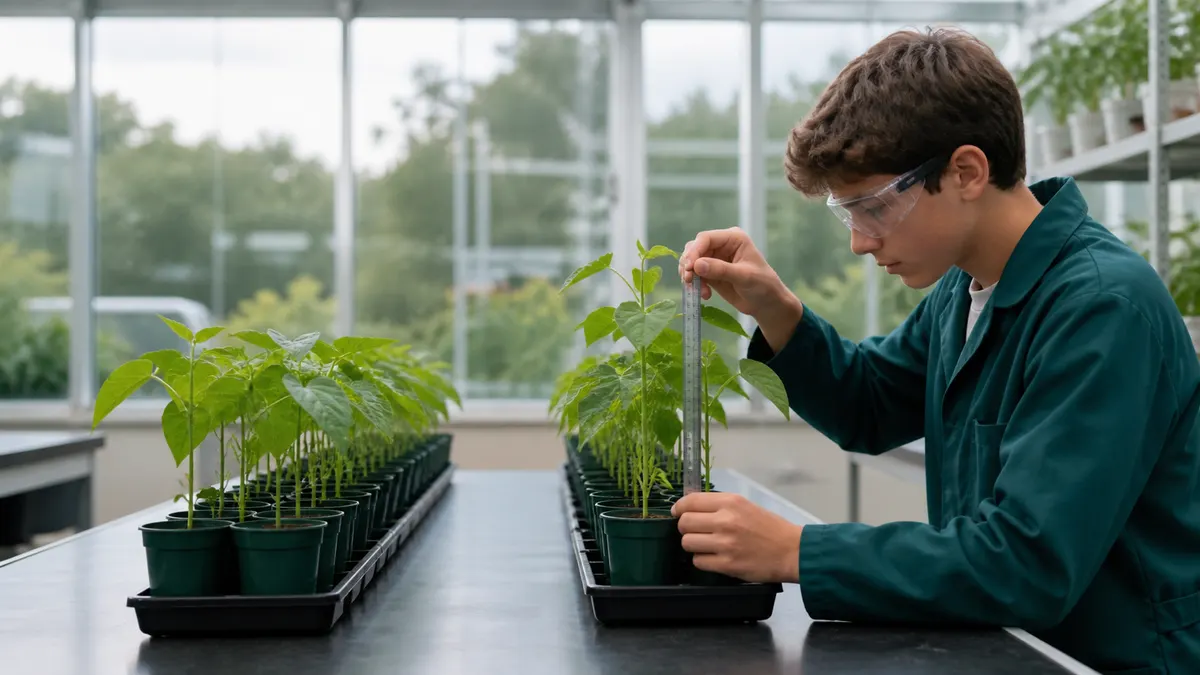
A student measures bean plants arranged in two matching rows in a school greenhouse.
A fair investigation changes one factor and keeps the rest matched.
A student wants to know whether fertilizer changes bean-plant growth. Name the independent variable, dependent variable, control group, and one controlled variable that would make the investigation fair.

Use: change it, measure it, no treatment, keep it the same.

Question 3 of 8

A checkpoint, not a test

Compare two macromolecules

Use structure and function in the same answer. Two or three sentences is enough.
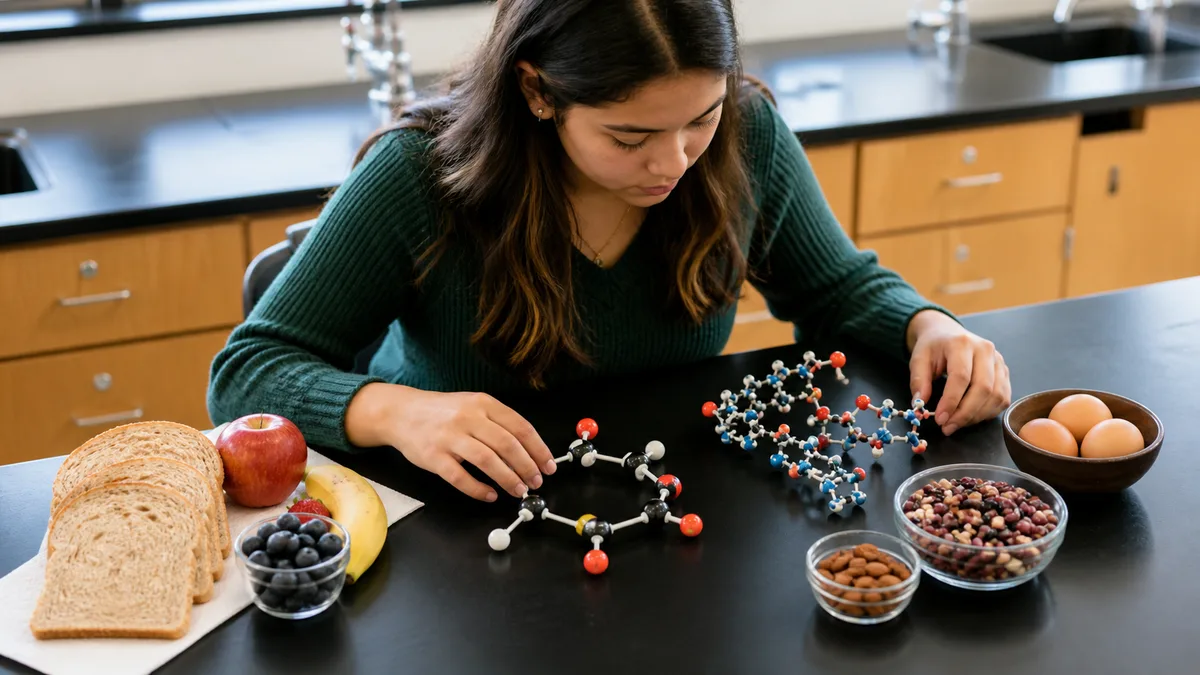
A biology student compares carbohydrate-rich and protein-rich foods beside classroom molecular models.
Structure and function both help identify a macromolecule.
Compare carbohydrates and proteins. Name the building blocks of each and give one important job each performs in living things.

Simple sugars versus amino acids, then one job for each.

Question 4 of 8

A checkpoint, not a test

Explain enzyme regulation

Write what you would say out loud. Two or three clear sentences is enough.
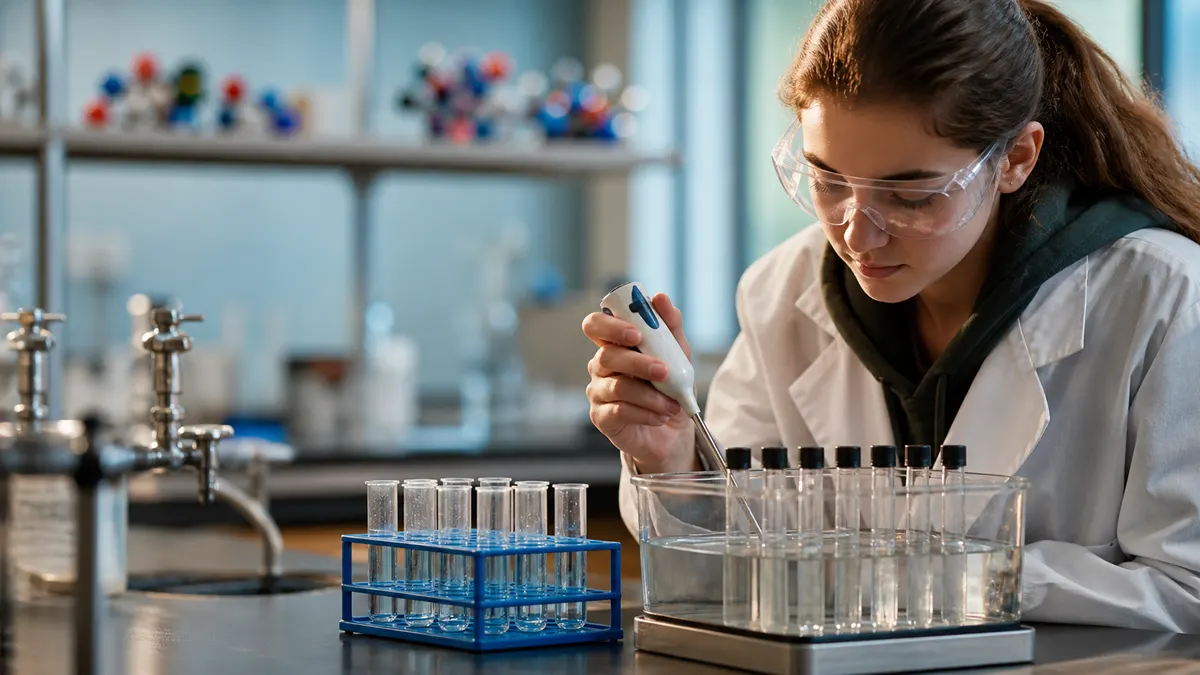
A student compares test tubes in a rack and a controlled warm-water bath in a biology lab.
An enzyme's working shape determines whether it can catalyze a reaction.
How does an enzyme regulate a chemical reaction, and why can denaturing stop the enzyme from working?

Use the words activation energy, shape, and active site if they help.

Question 5 of 8

A checkpoint, not a test

Follow the atoms

Keep the focus on what happens during a chemical reaction.
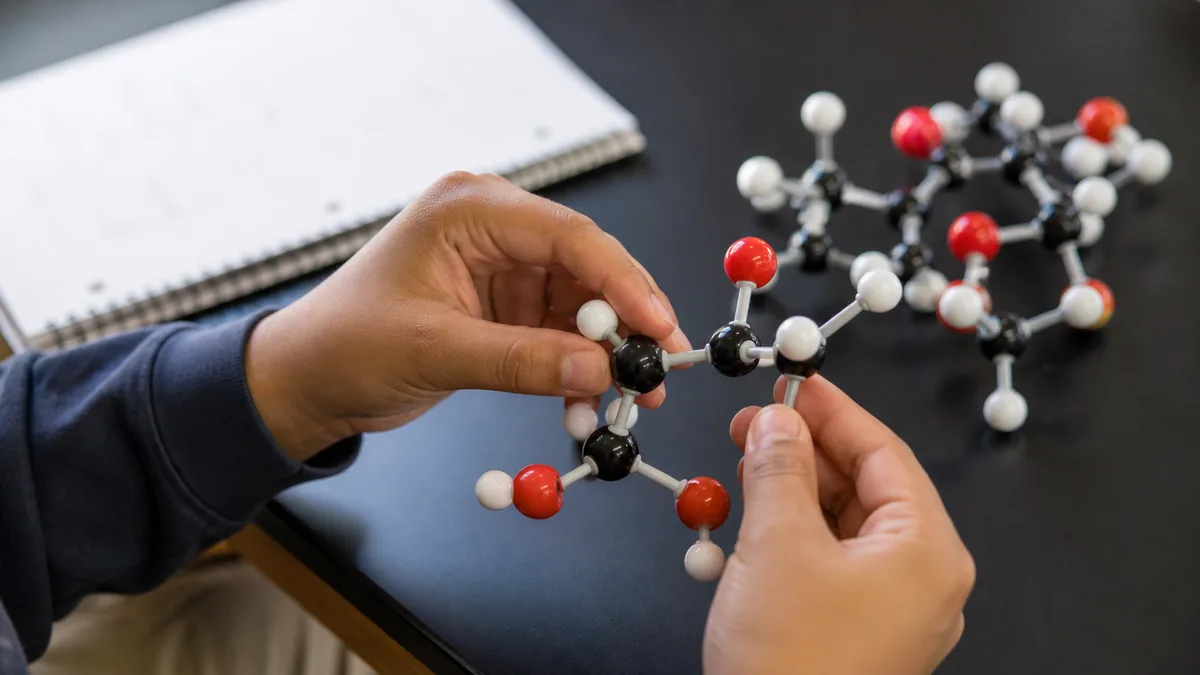
A student's hands rearrange the same colored pieces in a classroom molecular-model kit.
Chemical reactions rearrange atoms into new combinations.
The course says glucose and fructose can combine to form sucrose. What happens to the carbon, hydrogen, and oxygen atoms during this kind of reaction, and why do sugar-atom rearrangements matter to cells?

The atoms are recombined into a different product, and sugar reactions help provide energy for cell processes.

Question 6 of 8

A checkpoint, not a test

Use evidence from early Earth

Name the conditions, then connect them to the experiment.
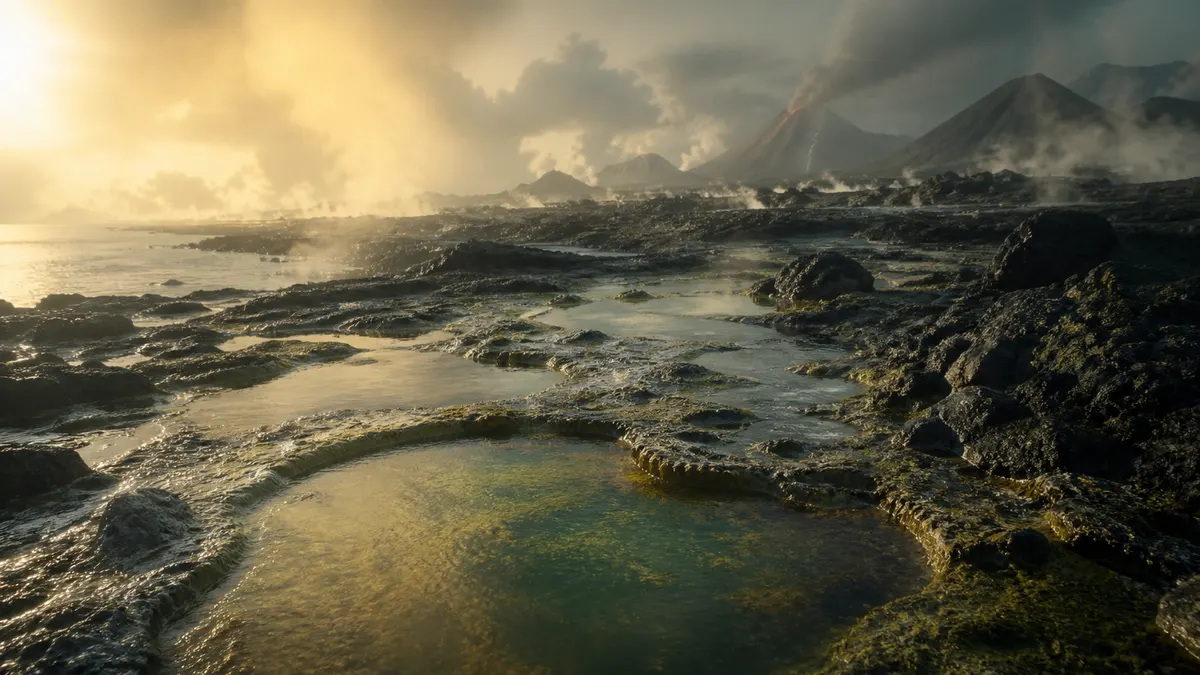
A scientifically grounded reconstruction of a barren volcanic shoreline on early Earth.
Early Earth had little oxygen and strong sources of energy.
Describe two conditions on early Earth that could support the formation of organic molecules. What did the Miller-Urey experiment show, and what did it not prove?

Think about oxygen and energy, then amino acids from nonorganic materials.

Question 7 of 8

A checkpoint, not a test

Connect RNA to the universal code

Build the connection in order. A few sentences is enough.
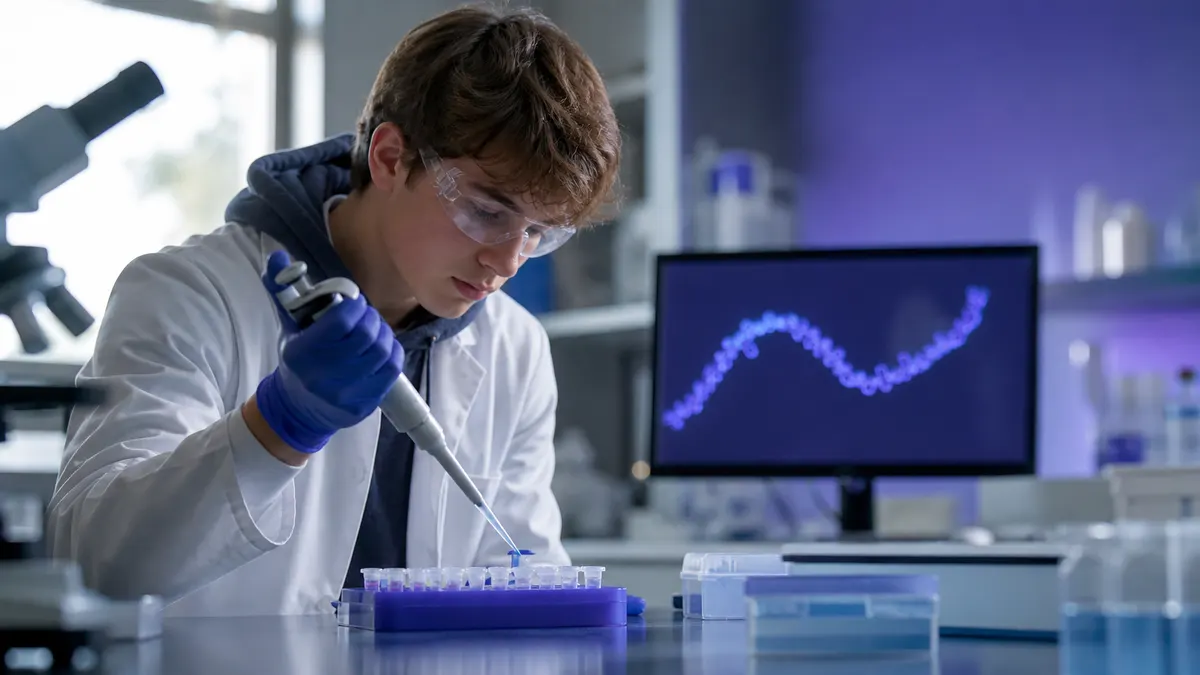
A student researcher uses a micropipette beside an abstract single-stranded molecular display.
RNA can carry information, copy, and catalyze reactions.
How could nucleotides and self-replicating RNA help explain why living organisms share a universal genetic code?

Nucleotides build RNA; RNA can carry and copy genetic information.

Question 8 of 8

A checkpoint, not a test

Early cells changed the atmosphere

Connect the cells, the kind of respiration, and the later oxygen change.
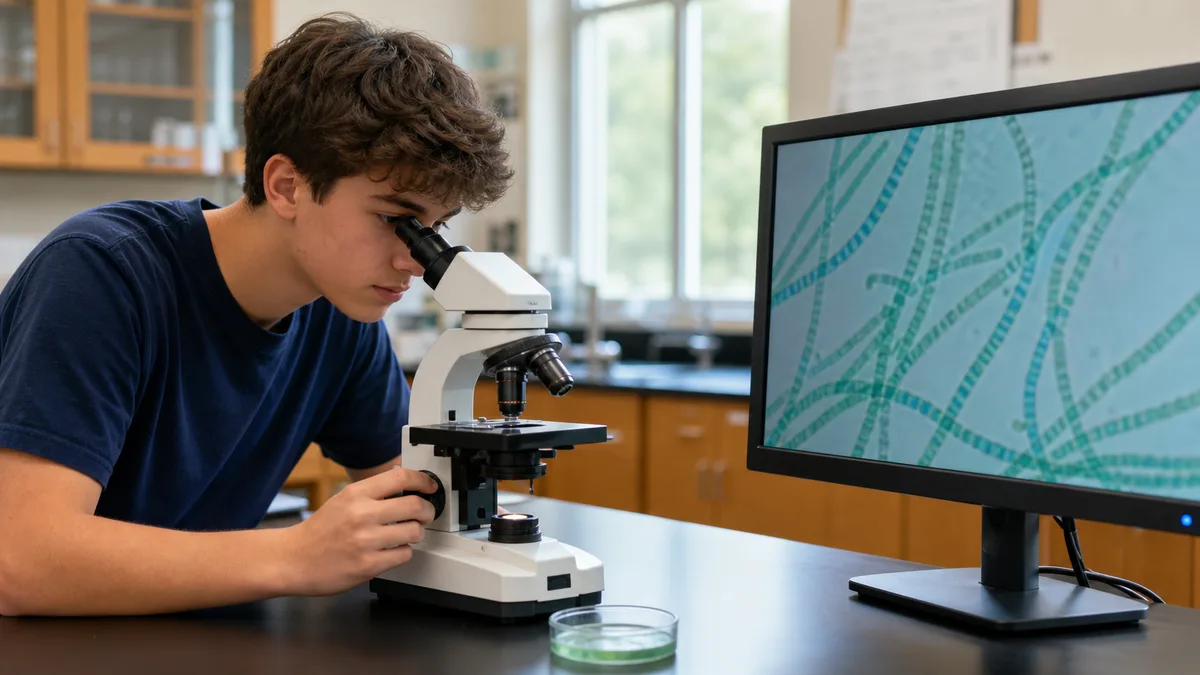
A biology student examines a cyanobacteria culture with a microscope.
Photosynthetic cyanobacteria added oxygen to Earth's atmosphere over time.
What kind of cells likely came first, why did anaerobic respiration fit early Earth's atmosphere, and how did cyanobacteria make aerobic life possible later?

First cells, no-oxygen respiration, photosynthesis, then oxygen-using life.