By the end you can
- Choose a seen work and research its historical or cultural context.
- Complete every category in the official research chart with evidence.
- Write a persuasive rationale with a claim, evidence, reasoning, and conclusion.
Zoom In on Theatre and Film Β· 100-point reflection upload Β· quiz worth 100 pts
By the end you can
Use this if 'significant' feels too vague.
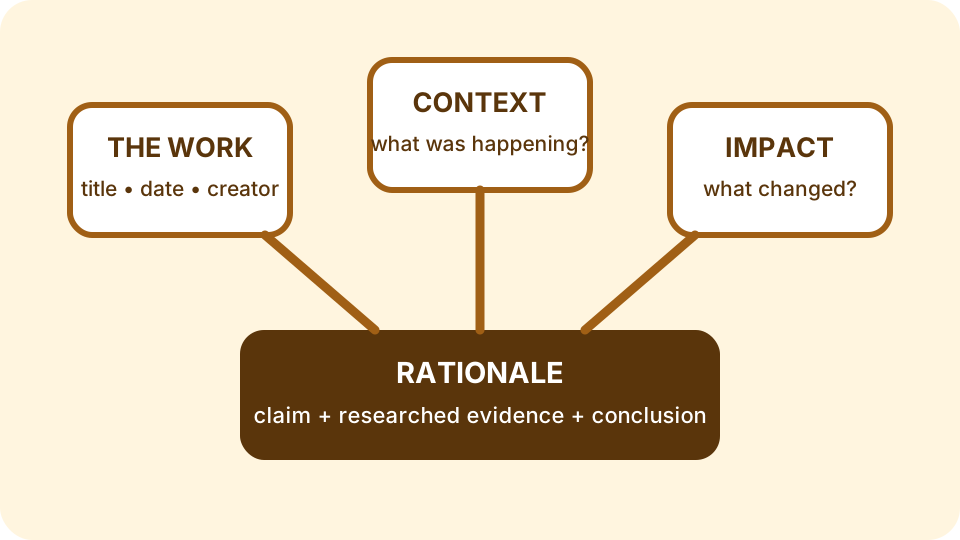
What was happening when the work appeared?
What technique, representation, conversation, or later work did it influence?
Which credible source documents that effect?
Does popularity alone prove cultural significance?
No. Explain the impact and support it with research.
Got it now? Scroll back up and re-read the section β it should land differently.
Pick a film, series, or play you have seen and believe has affected culture or history. A personal favorite can work, but preference alone is not evidence of significance.
The course allows the National Film Registry or a researched list of important theatre works as a starting point. Record the title, creator, release or performance date, and credible sources.
Frame a testable claim: what changed, what conversation the work captured, what technique influenced later work, or why people still study it.
Use the official assessment document. Complete every category. Useful evidence can include the work's historical setting, production innovations, representation, public response, influence, preservation, revivals, or later adaptations.
Separate a source fact from your interpretation. Save the source beside the note so you can verify it. The top rubric band needs an entire chart and ample evidence of research.
Open with a topic sentence that states why the work is historically or culturally significant. Use researched facts, then explain how each fact supports the claim.
End with a conclusion that returns to the significance. Edit grammar, punctuation, and conventions. The paragraph must persuade, not only summarize the plot.
Use a four-part paragraph.
State why the work matters.
Give a researched fact.
Explain how the fact proves the claim.
Return to the work's significance.
What must come between evidence and conclusion?
Reasoning that connects the evidence to the claim.
Got it now? Scroll back up and re-read the section β it should land differently.
Choose the strongest evidence and reasoning pattern.
Tick these off as you go. Saved in this browser.