01.03 The Story Arc

Zoom In on Theatre and Film Β· 25-point quiz Β· quiz worth 25 pts

The big idea A story moves through six plot stages, while Aristotle's six elements explain what a dramatic work is made of.
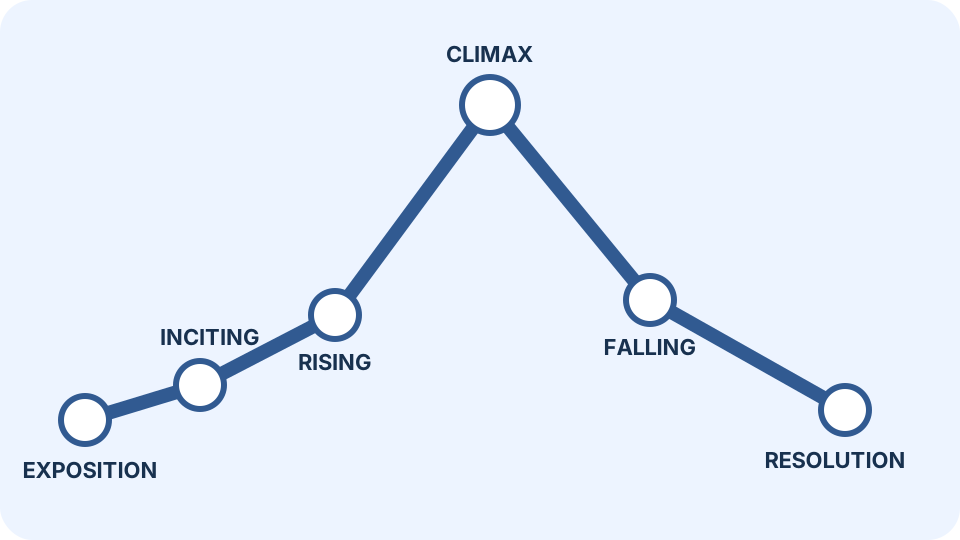
A six-part story arc rising to a climax and falling to resolution

By the end you can

  • Put the six plot stages in order and distinguish inciting incident from climax.
  • Match Aristotle's six dramatic elements to their roles.
  • Recognize that a work may adapt the six-part arc across a film trilogy or across individual episodes and a whole series.

Before the story-arc quiz

Use this if the two six-item lists are mixing together.

Not sure about the basics underneath this lesson?

Climb the six-part plot

Exposition establishes setting, characters, and the starting situation. The inciting incident introduces the central conflict and sets the main action in motion.

Climb the six-part plot (2)

Rising action develops complications and raises tension. The climax is the highest-tension turning point where the central conflict changes direction.

Climb the six-part plot (3)

Falling action shows consequences after the climax. The resolution settles the conflict and reveals the new situation.

Inciting incident starts the central action. Climax is the peak turning point.
Likely on the quiz Do not call the first exciting event the climax. Ask which moment changes the outcome of the central conflict.
Not sure about this bit?

One arc can sit inside another

Not every story follows Freytag's format exactly. The Empire Strikes Back ends in the middle of its climax with nothing resolved. Inside the full Star Wars trilogy, that movie's climax becomes part of the trilogy's rising action, and the larger climax arrives in the third movie.

One arc can sit inside another (2)

A television or streaming series can work the same way. Each episode may have its own plot arc while all the episodes together form a longer series arc.

A shorter film or episode arc may sit inside the rising action of a larger trilogy or series arc.
Likely on the quiz Ask whether the question is about one movie or episode, or the larger trilogy or series.

Add Aristotle's six elements

Plot is the action. Character is revealed through choices and qualities. Thought is the ideas or reasoning the work expresses.

Add Aristotle's six elements (2)

Diction is word choice and delivery. Spectacle is the production's setting and technical presentation, including scenery, costumes, lighting, special effects, and sound.

Add Aristotle's six elements (3)

Song is music: songs, scores, and soundtracks that add harmony, rhythm, and artistic ornament. It can shape emotion even when the work is not a musical.

Add Aristotle's six elements (4)

The elements work together. A visual effect is spectacle; the words spoken during it are diction; the event it presents belongs to plot.

Plot stages organize action. Aristotle's elements describe the ingredients of drama.
Likely on the quiz Camera effects, scenery, costumes, and stage visuals point to spectacle, not diction.

Practice the quiz moves

Name the story function or dramatic element.

Trace the action from setup to resolution.
1 / 5 0 correct

Final checklist

Tick these off as you go. Saved in this browser.