01.06 Literary Essentials DBA Prep

Literary Essentials Β· Discussion-Based Assessment

The big idea The 50-point DBA has three jobs: show what you understand (30), explain choices in your own work (15), and reflect on how you learned (5). For a content question, use: answer β†’ evidence β†’ connection.
The Literary Essentials DBA rubric and an answer-evidence-connection response frame

By the end you can

  • Explain major Literary Essentials concepts with relevant evidence
  • Discuss the process and academic choices behind work completed in the module
  • Name a strength, a challenge, and an actionable next step
  • Complete the conversation and submit a two- to three-sentence summary
Before the DBA β€” use the rubric as your map

The conversation is not only a vocabulary check. Most points come from explaining course ideas with support, then discussing your own work and reflecting on how you learned.

Not sure about the basics underneath this lesson?

Start with the rubric

Knowledge and Understanding β€” 30 points: explain the course content, support it with evidence, and connect it to another relevant idea, text, or real-world example.

Start with the rubric (2)

Discussion of Student Work β€” 15 points: explain your process, participate in the conversation, and own the choices you made. Reflection β€” 5 points: identify strengths, challenges, and a useful strategy for future growth.

The point values tell you where to spend your preparation time.
Likely on the quiz A definition alone is a start. Add evidence and explain the connection to reach the strongest rubric level.

01.01 β€” Plot, setting, and conflict

Rehearse aloud: How do exposition, rising action, climax, falling action, and resolution work together? How can flashback, foreshadowing, in medias res, or pacing change the way a plot unfolds? How do setting and conflict shape a character's choices?

01.01 β€” Plot, setting, and conflict (2)

Keep straight: the climax is the turning point where the central problem begins to be solved. Conflict can be character versus character, nature, self, society, supernatural forces, or technology. An inference combines text evidence with what you already know.

Answer the concept, point to story evidence, then explain its effect.
Likely on the quiz If asked about a plot device, do not just name it. Explain what information it reveals or how it changes suspense and pacing.

01.02 β€” Point of view, character, and theme

Rehearse aloud: How does point of view limit or expand what the reader knows? What makes a character round or flat, dynamic or static? How does a theme develop through the character, conflict, and resolution?

01.02 β€” Point of view, character, and theme (2)

Keep straight: the protagonist drives the central action; the antagonist opposes that goal. A dynamic character changes while a static character does not. A topic is one or two words; a theme is a complete idea about life or human experience. To build a theme, summarize, interpret, and evaluate the story's evidence.

Use a specific character action or story moment as evidence.
Likely on the quiz State theme as a sentence, not a topic word such as friendship or courage.

01.03 β€” Diction, tone, mood, and figurative language

Rehearse aloud: How can denotation and connotation affect diction? How does diction reveal tone? How do imagery and figurative language help create mood?

01.03 β€” Diction, tone, mood, and figurative language (2)

Keep straight: diction is word choice. Tone is the author's or speaker's attitude. Mood is the feeling created for the reader. Denotation is the dictionary meaning; connotation is the feeling or association attached to a word.

Quote or paraphrase a word choice, then connect it to tone or mood.
Likely on the quiz Do not swap tone and mood: attitude belongs to the author or speaker; feeling belongs to the reader.

Discuss your 01.04 professional correspondence

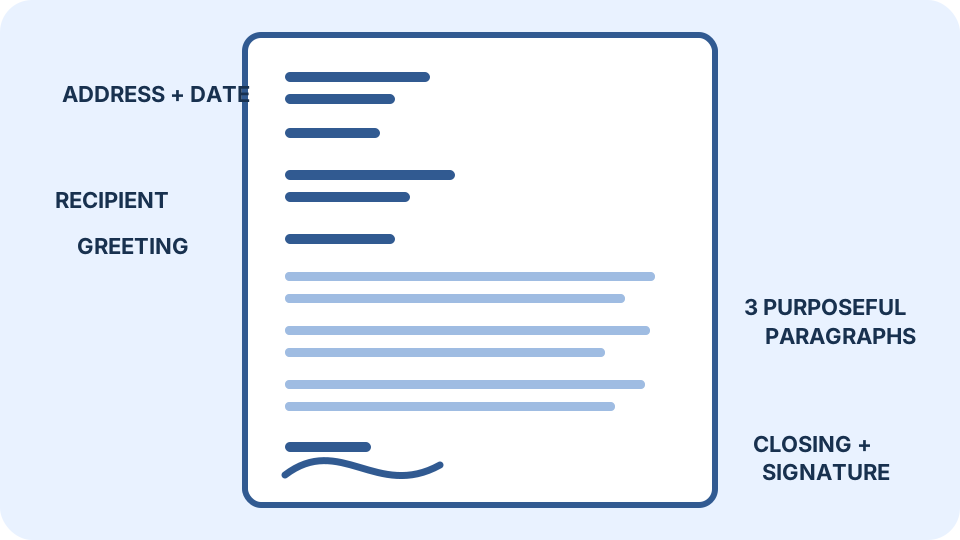
Be ready to describe the purpose and audience of the message you actually completed, why you chose a formal tone, and one revision that made it clearer or more professional.

Discuss your 01.04 professional correspondence (2)

Do not invent a choice you did not make. Open your submitted work or draft and select one real sentence, formatting decision, or revision you can explain.

Purpose, audience, tone, and format are choices you can discuss.
Likely on the quiz The rubric rewards ownership of your process, not a perfect-sounding answer about imaginary work.

Discuss your 01.05 literary synopsis

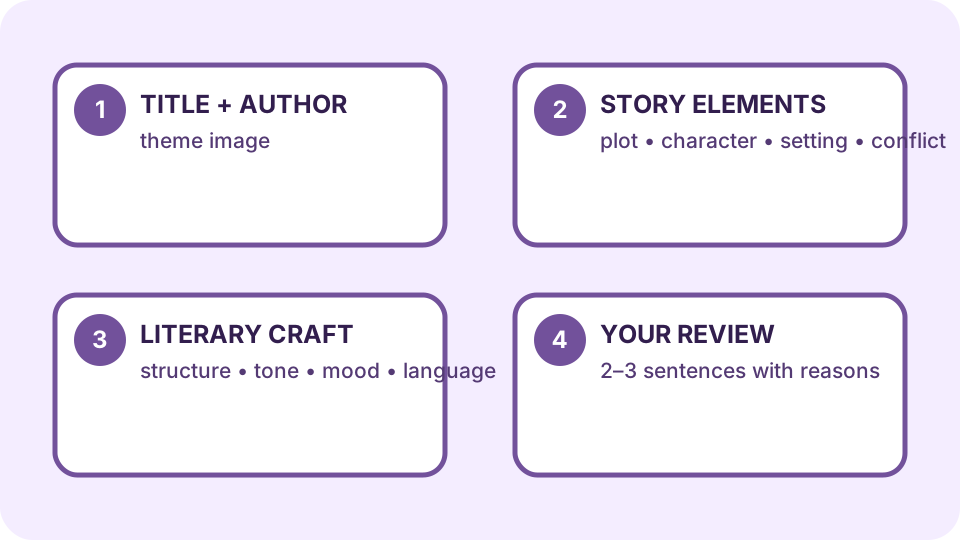
Be ready to explain how you separated the story summary from the craft analysis. Paragraph 1 covers title and author, plot, protagonist, setting, and conflict. Paragraph 2 explains structure or plot devices, tone, mood, and figurative language.

Discuss your 01.05 literary synopsis (2)

Choose one real decision from your deck: evidence selection, formal present tense, image choice, slide organization, or the recommendation. Explain what you tried, why you chose it, and what you would improve.

Use your actual four-slide deck to talk through process and choices.
Likely on the quiz Keep the two jobs separate: what happens in the story versus how the author creates meaning and effect.

Reflection and after-call summary

Prepare three honest notes: one module strength, one challenge, and one next step you can actually use. A next step is specific, such as annotating key diction before naming tone, not a vague promise to study harder.

Reflection and after-call summary (2)

After the conversation, submit a two- to three-sentence summary of what you discussed. Record the main concepts or work you covered and one useful takeaway.
Reflection and after-call summary (3)

The DBA Explain-it rehearsal gives you five short prompts across content, student work, and reflection.

Strength + challenge + next step completes the reflection.
Likely on the quiz The summary is written after the call. Do not prewrite details of a conversation that has not happened.

Mixed Literary Essentials check

Use this quick check to find which concept bucket needs one more spoken answer before the DBA.

After each choice, explain why it is right without rereading the options.
1 / 10 0 correct

Final checklist

Tick these off as you go. Saved in this browser.