01.05 Summarizing Synopses

Literary Essentials Β· Literary synopsis slide deck Β· quiz worth 65 pts

The big idea Turn one assigned short story into a two-paragraph literary synopsis and a clear four-slide presentation without retelling every event.
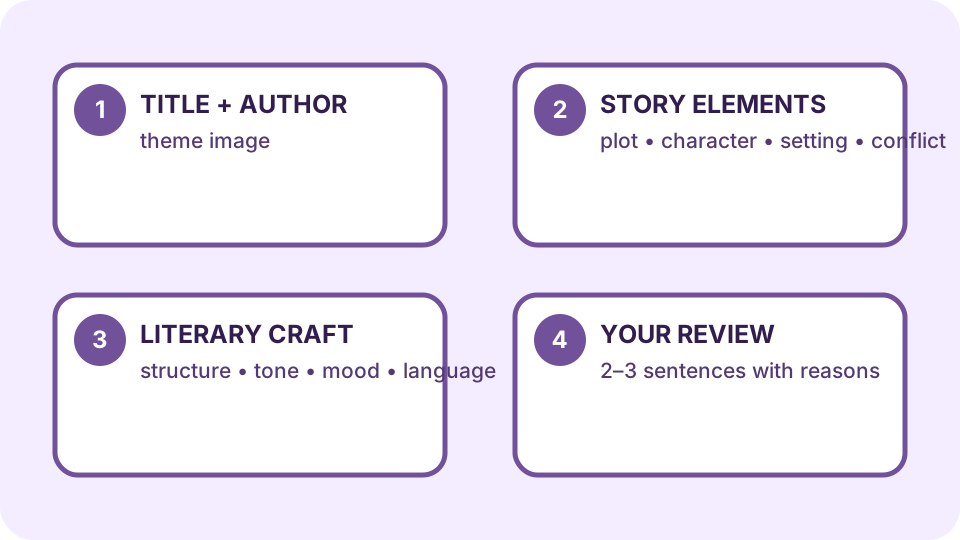
Four cards showing the required literary synopsis slides

By the end you can

  • Gather story evidence for plot, protagonist, setting, conflict, structure, tone, mood, and figurative language.
  • Draft the two required synopsis paragraphs in formal present tense.
  • Build four readable slides with a coherent design and meaningful images.

Before the synopsis

Use this if the story elements are blurring together.

Not sure about the basics underneath this lesson?

Choose the evidence before writing

Use the short story you actually read: A White Heron, The Pedestrian, or The Scarlet Ibis. Keep the text open. Your synopsis needs evidence, not a memory-only plot dump.

Choose the evidence before writing (2)

Gather two groups. Story basics: plot, protagonist, setting, and conflict. Literary layers: structure or plot devices, tone, mood, and the figurative language that creates the mood.

Choose the evidence before writing (3)

Write in present tense. Name the author by first and last name once, then use the last name. Keep the voice formal and informative.

The evidence has a destination. Gather it before opening the slide editor.
Likely on the quiz The synopsis row is 20 points and expects all six named elements: plot, protagonist, setting, conflicts, mood, and tone.

Build the two synopsis paragraphs

Paragraph 1: title and author, concise plot summary, protagonist, setting, and conflict. Use textual support, but do not narrate every scene.

Build the two synopsis paragraphs (2)

Paragraph 2: explain structure or plot devices, identify tone with support, identify mood, and connect figurative language to that mood.

Build the two synopsis paragraphs (3)

Coherence means each sentence leads to the next. Revise repeated ideas. Check conventions, formal style, and sentence variety after the content is complete.

Paragraph 1 covers what happens. Paragraph 2 explains how the author builds meaning.
Likely on the quiz Tone is the author's attitude. Mood is the feeling created for the reader. Do not swap them.
Not sure about this bit?

Turn the writing into four slides

Slide 1: title, author, and one image or icon representing theme. Slide 2: paragraph 1. Slide 3: paragraph 2. Slide 4: a two- to three-sentence recommendation with reasons.

Turn the writing into four slides (2)

Use the same colors, fonts, and visual style throughout. Make text large and high-contrast. Include at least two images that add meaning. Avoid clutter, hard-to-read fonts, and effects that flash or pulse.

The exact four-slide map from the course requirements.
Likely on the quiz Digital media is 20 points. A complete synopsis in an unreadable or inconsistent deck leaves major points behind.

Practice the requirements

Match each decision to the assignment before you build.

A quick requirements check.
1 / 5 0 correct

Final checklist

Tick these off as you go. Saved in this browser.