By the end you can
- Plan all required parts of the scholarship letter before drafting.
- Use formal present-tense language for the committee audience.
- Run a rubric check for format, language, and conventions before upload.
Literary Essentials · Professional letter upload · quiz worth 25 pts
By the end you can
Use this only if the blank page is slowing you down.
Write facts about you, accomplishments you can verify, and goals you actually have.
Purpose, evidence for your candidacy, conclusion plus thanks.
What should you never add just to sound impressive?
An accomplishment or detail that is not true.
Got it now? Scroll back up and re-read the section — it should land differently.
Your audience is the Stellar Student Scholarship Committee. Your purpose is to describe who you are, list your accomplishments and goals, and explain why you deserve the scholarship.
Before you draft, make three small lists: facts about you, accomplishments you can verify, and goals you actually have. Each detail needs to help the committee understand your case.
Professional diction is polite, precise, and impersonal. Cut slang, clichés, contractions, and casual comments. Strong verbs beat inflated vocabulary.
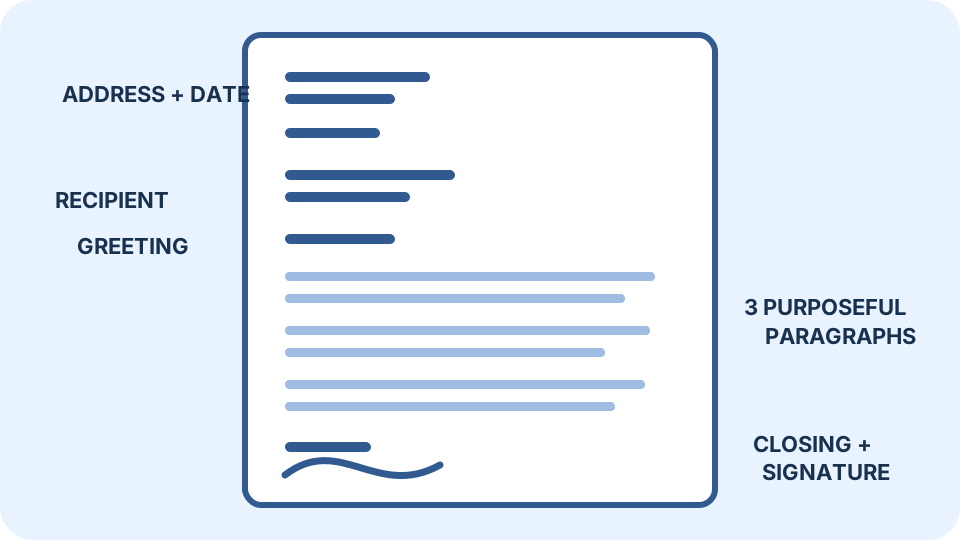
Use this order: your address, the date, the committee's address, the greeting, three purposeful paragraphs, the closing, and your signature.
Paragraph 1: state why you are writing. Paragraph 2: connect your experiences, successes, challenges, and goals to the scholarship. Paragraph 3: conclude and thank the committee for considering you.
Follow the spacing shown in the course model. Keep the page easy to scan. Do not turn the letter into an essay with a title centered at the top.
Copy this order onto a blank page before drafting.
Your address, date, recipient address.
Greeting, purpose paragraph, evidence paragraph, conclusion and thanks.
Sincerely, then leave signature space and type your name.
Where does the date go?
After your return address and before the recipient address.
Got it now? Scroll back up and re-read the section — it should land differently.
Read the letter once for meaning. Does every paragraph do its assigned job? Read it again for tone. Replace casual wording and contractions. Read it a third time only for spelling, punctuation, and grammar.
Final check: correct spacing and structure, present tense, formal academic language, and virtually no convention errors. Save the final file in the format Canvas accepts, then upload it to 01.04.
Choose the move that best matches the assignment and rubric.
Tick these off as you go. Saved in this browser.