The big idea Practice explaining a concept, giving an example, and connecting the result to its cause.
02.07 Life's Origins DBA rehearsal
Module 02: Life's Origins
Module 02: Life's Origins
Pick two or three prompts from different topics. Explain the idea in your own words, give an example, and say why it happens. If a term is unfamiliar, revisit the lesson's flashcards before another round.

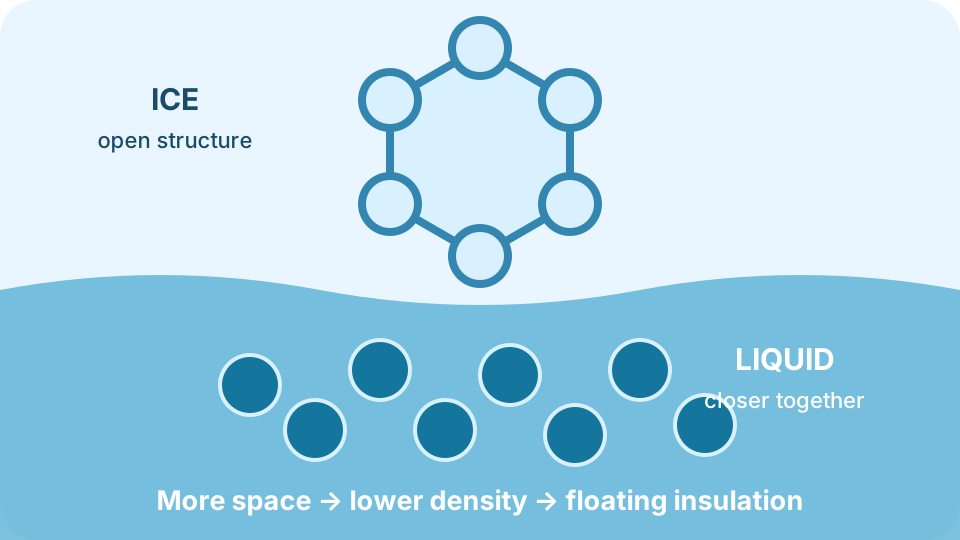
Explain why separate water molecules attract. How does that explain cohesion? Why can ice float? Explain how water travels up a paper towel, using both cohesion and adhesion. What does a low pH tell you about hydrogen-ion concentration?
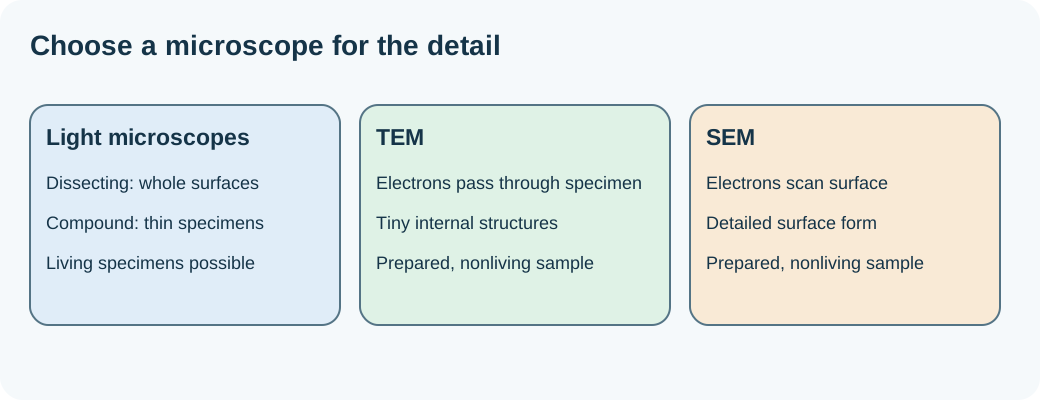
State the three parts of cell theory. Compare a prokaryote with a eukaryote. What structures do both share? Choose a microscope for living pond organisms, a whole leaf surface, or tiny internal cell details, and explain your choice.
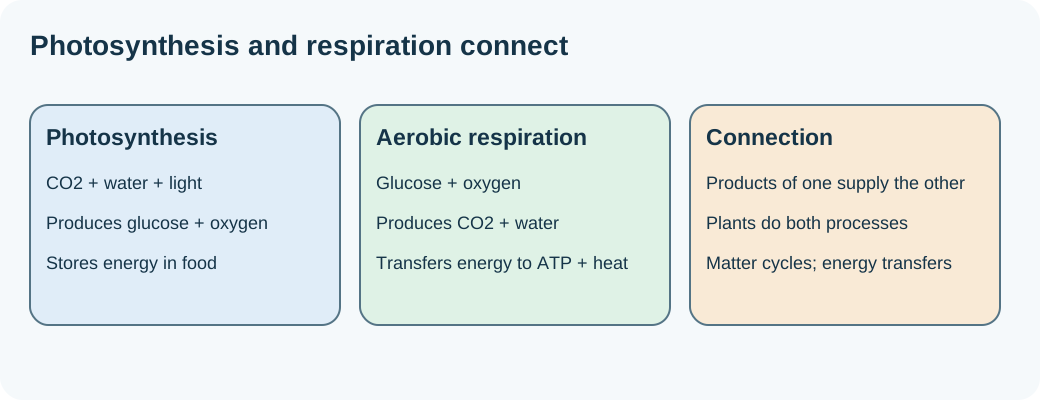
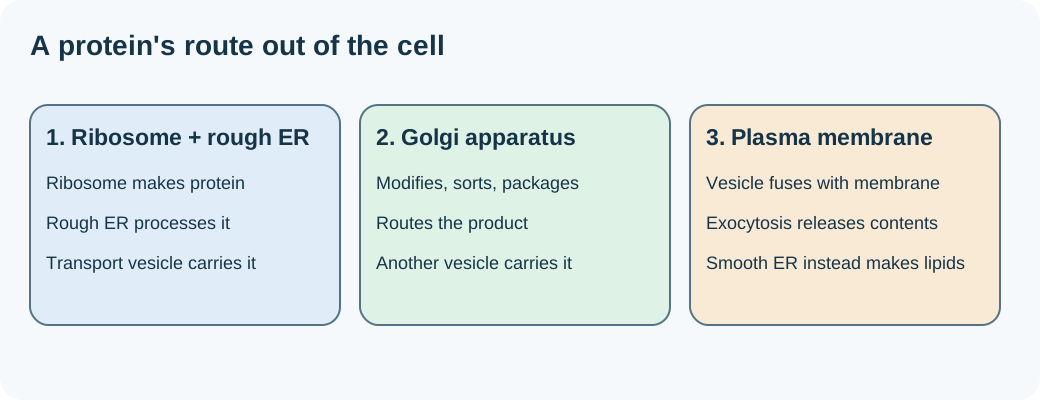
Explain why a plant cell has both chloroplasts and mitochondria. Follow a protein from its ribosome to release outside the cell. Distinguish nucleus, nucleolus, and nuclear envelope. Compare cell wall with cell membrane.
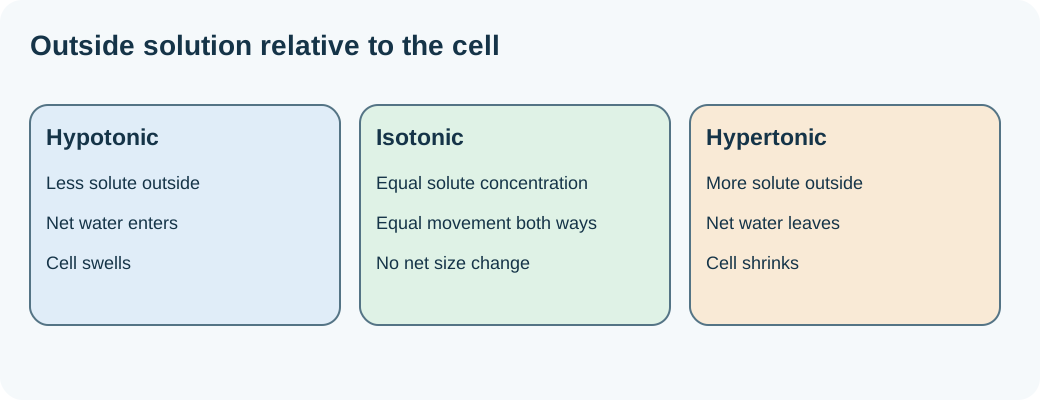
Predict what happens to a cell in hypotonic, hypertonic, and isotonic surroundings. Explain why facilitated diffusion is passive even though a protein helps. Distinguish a control treatment from controlled variables. Use your egg-lab measurements to explain one mass change.
Explain the ATP–ADP cycle and why recharging needs energy. State the inputs and outputs of photosynthesis and respiration. Why does a plant need both? Compare ATP yield with and without oxygen. Explain how yeast makes dough rise.